Rhine Valley Private Tour from Amsterdam
Plan a Rhine Valley itinerary around river towns and landscapes; a multi-day journey is more suitable than a short day trip.
The valley and its heritage
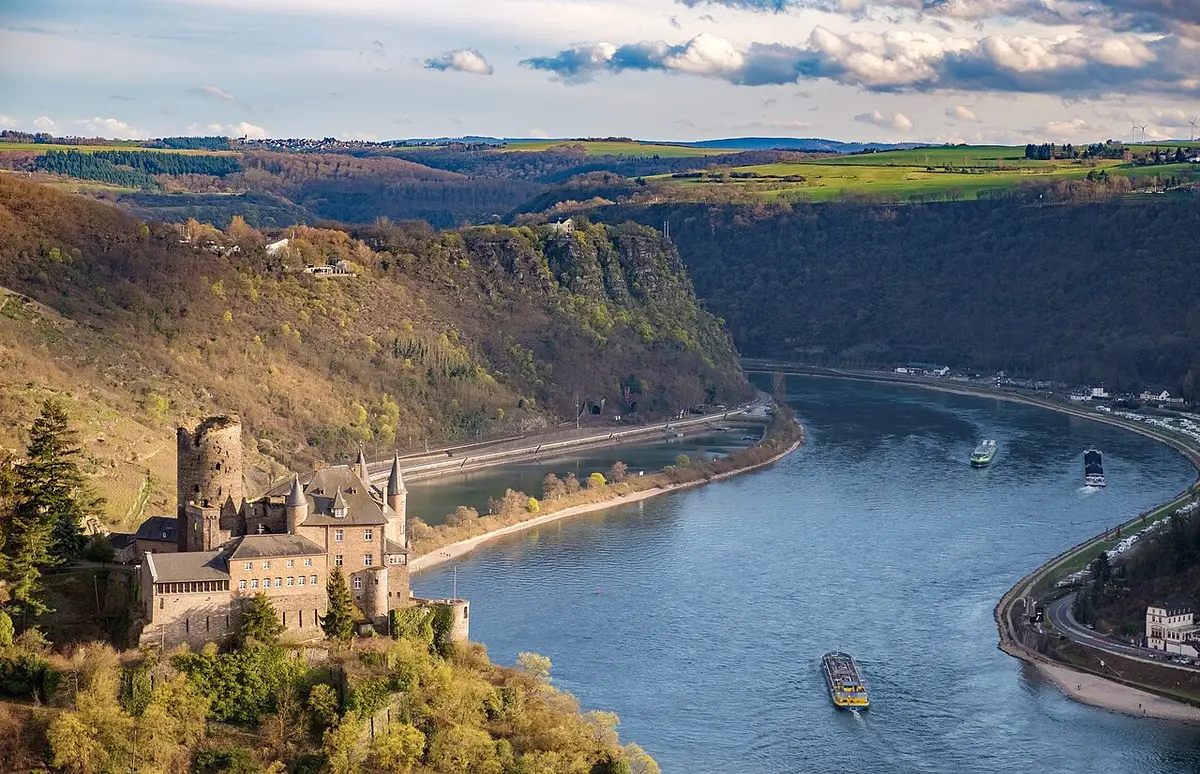
The Upper Middle Rhine Valley, roughly between Bingen and Koblenz, is a UNESCO World Heritage landscape of steep vineyards, castles and small riverside towns. From Amsterdam it lies about four to five hours by road, so a single-day return trip is exhausting and an overnight stay is recommended. A private route lets you stop where the view or the wine tempts you.
Castles and the Loreley
The valley holds dozens of castles on the slopes, such as Marksburg near Braubach, which is one of the few that were never destroyed, and the twin castles Katz and Maus near St Goarshausen. The Loreley rock, a steep cliff above a narrow bend of the Rhine, is linked to a famous legend. Viewing points and visitor centres have their own opening hours.
Towns and wine
Boppard, St Goar, Bacharach and Rüdesheim are towns with half-timbered houses and wine taverns. Rüdesheim's Drosselgasse is a narrow, lively lane known for its taverns. Riesling grows on the steep slopes. If you plan to taste wine, the benefit of a driver is clear.
Ferries and cruises
Passenger boats run between towns on seasonal timetables, and car ferries cross the river at several points. A boat leg can be added for variety, but check timetables. Operators set their own prices.
Moselle and Burg Eltz
Burg Eltz, a medieval castle in a wooded valley near the Moselle, is a popular addition, reached by a short walk or a shuttle in season. The Moselle valley has its own wine towns, such as Cochem.
Planning a multi-day route
We suggest two days with a hotel in the valley. We do not book hotels, but we plan the transport with you. See the Rhine Valley destination page. Tours are custom enquiries with no online final price. Send us your date, party size and starting point through the contact page and we will discuss the route and a quote with you directly.
A sample two-day plan
On the first day, leave Amsterdam in the morning, drive through Cologne and Bonn and reach Koblenz by the afternoon, where the Deutsches Eck marks the meeting of the Rhine and the Moselle. Continue south along the river to Boppard or St Goar for the night. On the second day, see the Loreley, take a river boat, visit Rüdesheim for lunch, and return north, arriving in Amsterdam in the evening.
Wine and food
The valley is Riesling country, and wine taverns serve local wine with regional dishes such as Flammkuchen, Sauerbraten and Rheinischer Sauerbraten. Spätburgunder red wine also grows here. Many estates offer tasting by appointment, and some towns hold wine festivals in late summer and autumn.
Trains, ferries and the river
Freight and passenger trains run on both banks of the Rhine, and their noise is a known feature of the valley. Car ferries link the banks at several points, and passenger boats run seasonally. Check timetables, since schedules change.
Season and weather
Late spring to autumn is best, with vineyards in green and gold. Winter brings mist, fewer boats and closed attractions, and some castles close completely. Check each attraction before planning around it.
Koblenz and the Deutsches Eck
Koblenz was founded by the Romans at the confluence of the Rhine and the Moselle. At the Deutsches Eck, the German Corner, a huge monument stands where the rivers meet. A cable car crosses the Rhine to the Ehrenbreitstein Fortress, which has views and exhibitions. Koblenz works well as an arrival point for the valley.
The castles in more detail
Marksburg is the only hill castle on the Middle Rhine never destroyed, and can be toured with a guide. Rheinfels near St Goar is a ruin with tunnels you can explore. Stolzenfels was rebuilt in the romantic style by a Prussian king. Many castles are now hotels or private homes, so check which allow visitors.
Legends and literature
The Loreley legend tells of a maiden who lured sailors to their doom. The poet Heinrich Heine wrote a ballad about her, and the rock has become a symbol of Rhine romanticism. Rhine travel became popular in the 19th century when writers and painters such as Turner visited.
Walking and cycling
The Rheinsteig and the Rheinburgenweg are long walking trails on opposite banks, with sections of varying difficulty. Cycle paths run along the river. If you want to walk, tell us and we propose a stretch with a drop-off and pickup at the ends.
Money and practicalities
Smaller places may prefer cash. Our quote covers the vehicle. Boats, castle entries, meals and wine are separate. Check opening times, since castles close in winter and on certain days.
Why a private vehicle suits the valley
The valley has good trains, but they run on both banks and stations are not always near sights. A private vehicle lets you switch banks by ferry, stop at viewpoints and carry wine purchases without worrying about timetables. It also allows a flexible schedule when the weather changes and a castle becomes more attractive than a boat. For a couple or a small group, it can make the trip feel like a holiday rather than a logistics exercise.
Questions about this tour
Is the Rhine Valley doable in a day from Amsterdam?
It is possible but very long. An overnight stay is more enjoyable.
Which castle should I choose?
Marksburg is well preserved, Burg Eltz is picturesque and Katz and Maus are scenic from the river.
Can we taste wine?
Yes, at wine estates and taverns. A driver means no one drives after tasting.
Are ferries included?
No, unless a written quote says so.
Is the Rhine Valley suitable for children?
Yes, with castles and boat rides, though the trip is long.
Which towns are the best to stay in?
Boppard, St Goar, Bacharach and Rüdesheim are popular. We do not book hotels.
Where is the best viewpoint?
The Loreley plateau and the Rheinsteig trail sections offer broad views.
Can we see a castle from the inside?
Marksburg and Rheinfels allow visits, subject to season and opening days.
Tours are custom enquiries. There is no online final price, tickets are not included unless a written quote says so, and we do not promise a licensed guide. See all private tours.
The best itinerary is the one that fits your day.
Private tours begin with your interests, not a one-size-fits-all checklist. Let us know how long you have, where you are staying and what you would like to experience. We can discuss a route and a quote with you directly; tours have no online final price. Longer journeys may be better planned across more than one day.
Useful details to include
- Preferred date and start point
- Number of travellers and any mobility needs
- Places or themes you would like to include
- How much time you would like to spend out
Explore Germany
Need a tailored itinerary?
Request a quote
Tell us what you have in mind on our separate quote page.
Go to quote requestA good place to begin
Tell us what you have in mind
Book a transfer online with the form on our homepage, or send us your route for a tour or a special request and we will reply to discuss it.